

Two popular Audio Array condenser mics, different approaches—one plugs straight into your laptop, the other needs an audio interface. Here’s how to choose.
The Short Story
Audio Array’s AM-C1 and AM-C43 are both affordable condenser microphones targeting content creators, but they work in fundamentally different ways. The AM-C1 is a USB plug-and-play mic with 192kHz/24bit audio quality that connects directly to your computer or phone, while the AM-C43 uses XLR-to-3.5mm connectivity and requires 48V phantom power from an audio interface or mixer. Both feature 16mm diaphragms and 20Hz-20kHz frequency response, but they’re designed for different user types—beginners versus those with existing audio gear.
Main Points
- AM-C1: USB connection, plug-and-play, works with computers and phones, no external power needed, priced around ₹2,874
- AM-C43: XLR-to-3.5mm connection, requires 48V phantom power, needs audio interface/mixer, better for studio setups
- Same core specs: Both use 16mm diaphragms, cardioid pickup patterns, and 20Hz-20kHz frequency range
- Different users: C1 for beginners/solo creators, C43 for those with existing audio production equipment
Breaking Down the Details
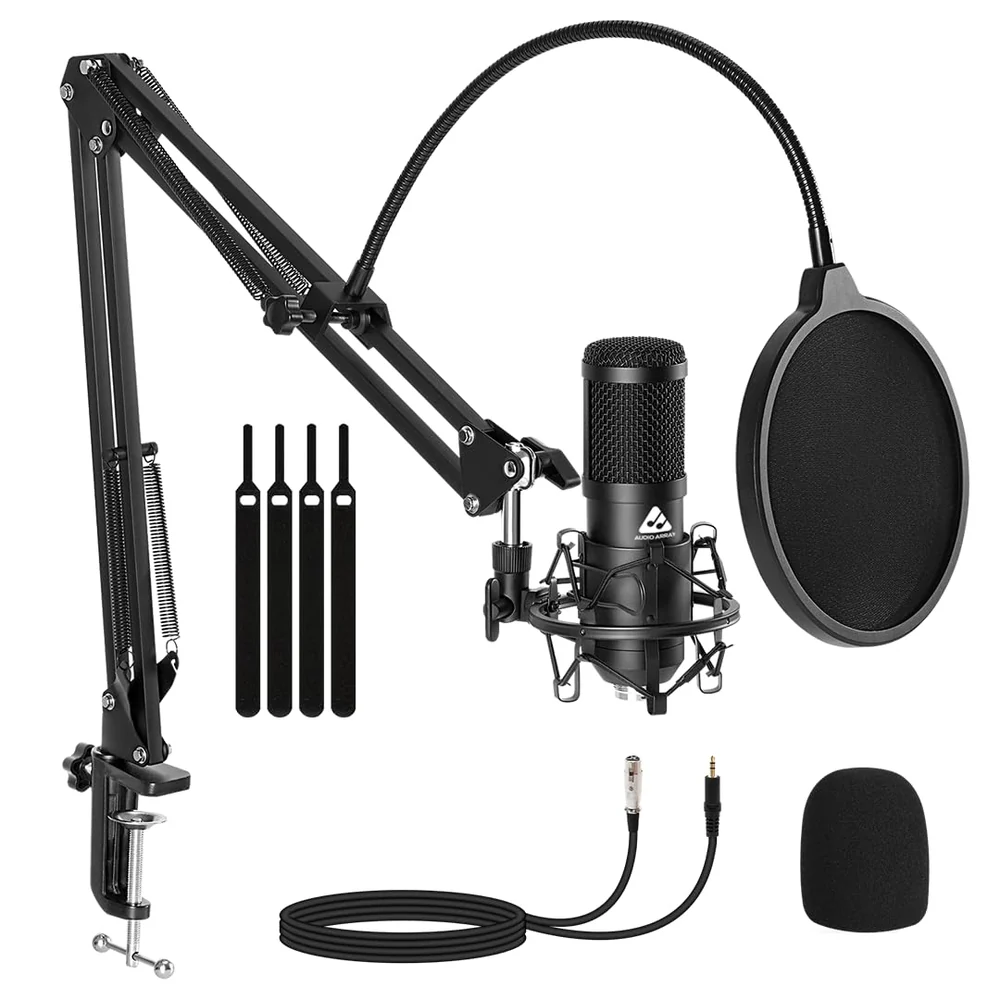
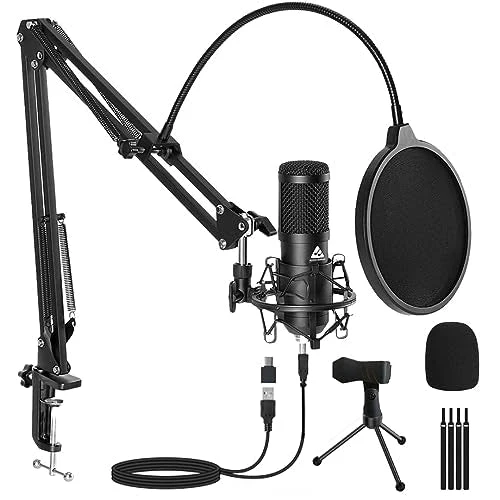
The Audio Array AM-C1 and AM-C43 look similar at first glance—both come bundled with boom arms, pop filters, shock mounts, and all the accessories you’d expect in a budget condenser mic kit. But the moment you try to connect them, the differences become crystal clear.
The AM-C1 is designed around convenience. It uses a standard USB connection with a 2.5-meter cable that plugs directly into Mac, Windows, or even mobile devices. No drivers, no software installation, no audio interface required. You literally plug it in and start recording. It’s the kind of setup where you can go from unboxing to recording your first podcast episode in under ten minutes.
The AM-C43 takes a different approach entirely. This mic uses XLR-to-3.5mm connectivity and absolutely requires 48V phantom power to function. That means you need to own—or buy—an audio interface, mixer, or preamp before you can use it. For someone just starting out, that’s an extra investment and an extra learning curve. But for creators who already have that gear, the C43 slots right into their existing workflow.
Sound quality wise, both mics share some fundamental specs. Each features a 16mm diaphragm and captures audio across the same 20Hz to 20kHz frequency response. They both use cardioid pickup patterns, meaning they capture sound from the front while rejecting noise from the sides and back—perfect for solo vocal recording or podcasting.
But here’s where things get interesting. The AM-C1 boasts 192kHz/24bit sampling, which is technically higher-resolution audio than most consumer-grade equipment. That’s impressive on paper. Meanwhile, the AM-C43 focuses on its 72dB signal-to-noise ratio and low-noise FET preamplifier, which translates to cleaner recordings with less background hiss.
In real-world use, most people probably won’t hear a massive difference between the two. The bigger factor is usually the room you’re recording in and how well you’ve positioned the mic. Both are more than capable of producing podcast-quality or YouTube-ready audio.
The Backstory
Audio Array has positioned itself as an affordable alternative to premium brands like Blue, Rode, and Audio-Technica. The Indian audio equipment market has been booming lately, driven by the explosion of content creators, remote workers, and home studios. People want professional sound without the professional price tag.
The AM-C1 launched as Audio Array’s flagship USB option, targeting the massive wave of first-time podcasters and YouTubers who didn’t want to deal with complicated setups. The success of that model likely led to the development of the AM-C43—a mic for the next level up, for creators ready to invest in proper audio interfaces and multi-track recording.
What’s clever about Audio Array’s strategy is that they’ve kept pricing accessible on both. The AM-C1 typically sells for around ₹2,874 after discounts, making it one of the most budget-friendly complete microphone kits in India. The AM-C43’s pricing varies but stays competitive in the entry-level XLR market.
The company’s focus on bundling everything you need—boom arm, shock mount, pop filter, cables—also removes a common pain point. Most brands sell these items separately, which adds up quickly and creates decision fatigue for beginners trying to figure out what’s actually necessary.
What People Are Saying
Customer reviews for the AM-C1 consistently praise its value for money and ease of setup, with multiple users noting it works well for both beginners and delivers clear audio quality. One common thread: people are genuinely surprised by how good it sounds for the price.
Some AM-C1 users do mention occasional concerns about build quality and performance consistency, which isn’t unusual for budget equipment. But the overwhelming majority seem satisfied, especially those using it for podcasting, gaming streams, or YouTube videos.
The AM-C43 has fewer public reviews, probably because it’s aimed at a smaller audience—people who already understand XLR connections and audio interfaces. One user specifically mentioned compatibility challenges when trying to connect the AM-C43 with the Audio Array AI-04 interface and mobile devices, highlighting that this mic does have a steeper learning curve.
Audio gear forums and Reddit threads generally position these mics in the “surprisingly good for the money” category. They’re not going to replace a Shure SM7B or Neumann U87, but that’s not the point. For someone recording in a bedroom or home office, these deliver more than acceptable results.
What This Means for You
Choosing between the AM-C1 and AM-C43 really comes down to one question: do you already own audio production equipment?
If you’re starting from scratch—maybe you just decided to launch a podcast, start streaming, or record YouTube voiceovers—the AM-C1 is the obvious pick. It works with Mac, Windows, and mobile devices right out of the box, and you won’t need to spend extra on an audio interface. The complete kit includes everything necessary to start recording immediately.
The AM-C43 makes sense if you’re already invested in audio gear. Maybe you own a mixer for live performances, or you’ve got an audio interface for recording instruments. The C43 integrates into those setups easily and gives you the flexibility of XLR connections, which generally offer better noise immunity over long cable runs compared to USB.
There’s also a future-proofing angle. If you know you’ll eventually want to build a more complex audio setup—multiple mics, mixing capabilities, hardware processing—starting with an XLR mic like the C43 means you won’t need to replace it later. The USB mic, by contrast, will always be limited to single-mic recording directly to a computer.
For video calls and casual content creation, though, the AM-C1 is frankly overkill in a good way. Most people on Zoom calls are using laptop mics or cheap headsets. Show up with the C1 and you’ll sound like a radio host by comparison.
Side-by-Side Specs
| Feature | AM-C1 | AM-C43 |
|---|---|---|
| Connection | USB (Type-A to Type-B) | XLR to 3.5mm |
| Power Source | USB bus-powered | 48V phantom power required |
| Diaphragm Size | 16mm | 16mm |
| Frequency Response | 20Hz – 20kHz | 20Hz – 20kHz |
| Sample Rate | 192kHz/24bit | N/A (analog signal) |
| Signal-to-Noise Ratio | Not specified | 72dB |
| Pickup Pattern | Cardioid | Cardioid |
| Compatibility | Mac, Windows, Mobile | Audio interface/mixer/preamp |
| Cable Length | 2.5m USB | 2m XLR to 3.5mm |
| Boom Arm Included | Yes (metal) | Yes (70cm steel) |
| Price Range | ₹2,874 (discounted) | Varies by retailer |
| Best For | Beginners, solo creators | Existing audio gear owners |
More Stories You May Want to See
If you’re shopping for budget audio gear, check out our comparison of Indian vs international microphone brands and whether the premium really matters. We’ve also got a guide to setting up your first home podcast studio on a ₹10,000 budget.
For those interested in the AM-C43 specifically, our deep dive into choosing the right audio interface for XLR mics walks through exactly what equipment you’ll need and why.
Where This Information Comes From
This comparison is based on:
- Official Audio Array product specifications from audioarray.in
- Verified customer reviews from Amazon India and Audio Array’s website
- User guides and technical documentation for both microphone models
- Hands-on user feedback from multiple verified purchasers
- Audio equipment forums and creator communities discussing these products
All specs, pricing, and features have been verified against official sources to ensure accuracy.
About the Writer
Written by the 360news.blog tech team, covering audio equipment, creator tools, and budget gear reviews for Indian audiences.
Bottom Line: The AM-C1 wins for plug-and-play simplicity and value if you’re starting fresh. The AM-C43 makes sense only if you already own or plan to buy an audio interface. Both deliver solid sound for the price—the real difference is what ecosystem you’re buying into.